Are Competition Draws Rigged? Check the Ticket Count First
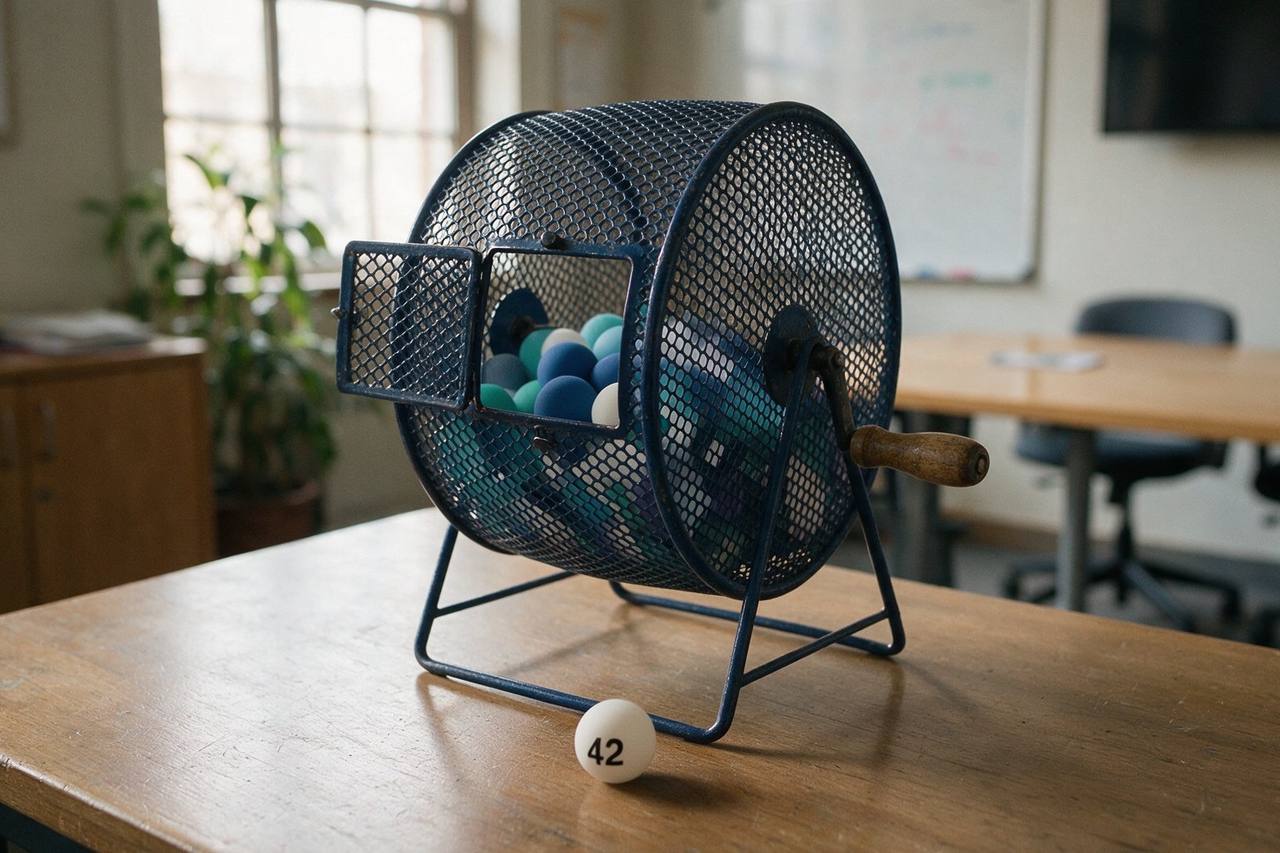
Very rarely, and the draw is the wrong place to start checking. An operator makes its money on the number of tickets it sells, not on who wins, so the number worth finding before you pay is the ticket total. Most sites publish it. Some make it hard to find.
By Joanne Jones · Last reviewed 5 October 2026
Full disclosure: we run a competition site.
Four different accusations wearing one word
"Rigged" gets used for four separate complaints, and only one of them is about the draw.
The draw wasn't done at all, and somebody picked a name. That's the one people mean. The winner doesn't exist, which is a prize that was never paid out. The ticket count went up after you'd paid, which quietly cut your odds. Or the prize never turned up.
Three of those four are about money. None of them would show up in a draw video.
Rigging the draw itself is rare. The other three are where things go wrong, and they're easier to check.
Why an operator has no reason to rig the draw
On 5 October we found a house competition on a large UK site: just under 30 million tickets at 19p each, a prize bundle valued at £2.1 million, a £1.5 million cash alternative, and a statement on the page that the prize would be won whatever the sales. It was 48.4% sold. That's roughly £2.76 million of tickets.
It had already passed the cash alternative and the headline value. With more than half the tickets still unsold.
That gap is not profit. Payment fees, advertising, staff and tax all come out of it. But it shows where the money sits. The operator gets paid by the ticket total, and it gets paid the same whoever wins. Fixing the draw would add nothing and risk everything, including the company.
So the draw is the least interesting number on the page. The ticket total decides your odds and the operator's income at once.
So where is the ticket total?
On 5 October we checked six well-known UK competition sites, on both the main listings and each competition's own page. Every site that runs draws shows the ticket total somewhere. Some just make you hunt for it.
| Operator | Ticket total published? | Where we found it |
|---|---|---|
| A | Yes | On the listing card ("61 / 8.5k") and again on the competition page ("Max Tickets: 8,500") |
| B | Yes | Competition page only, as "Total: 24,999 Tickets". The listing shows a percentage and tickets left |
| C | Yes | In the description text, below the prize details ("The total amount of entries: 29,999,999"). The listing and the top of the page show a percentage only |
| D | Yes | The clearest of the six: "1,729 / 199,999 Tickets sold, 198,270 Tickets remaining" |
| E | Yes | Competition page, as "30,321 / 194,995" beside the progress bar |
| F | No | A percentage only. These are skill competitions, where the closest guess wins, so the count doesn't set your odds. It still sets the money |
Two of the five draw operators show you a percentage until you open the competition and read down. A percentage on its own is the tell. "13% sold" sounds like information and isn't, because 13% of what? Without the total you can't work out your chance, and you cannot spot it if the total changes.
On the competition page, check the progress bar, the box beside the ticket selector, and the description under the prize. If it isn't in any of those, it is not there.
What a draw method is worth as evidence
There are four common ways to pick a winner. A random number generator on the operator's own system. A live-streamed draw, often using an online random number service on camera. A draw done by an independent person. A certified physical machine.
The DCMS voluntary code for prize draw operators accepts three of them: an independent person, a certified machine, or a computer process "that produces verifiably random and auditable results". It also asks operators to put the mechanism on their website.
A livestream shows you the draw. It doesn't show you the list the winner was picked from.
If an operator added 2,000 tickets in its own name before going live, the video would look identical. A random pick from a padded list is still random. That's why the ticket total, screenshotted before you pay, tells you more than an hour of footage.
"Provably fair", and what it doesn't cover
"Provably fair" usually means commit and reveal. Before entries close, the site picks a secret number and publishes a scrambled fingerprint of it, called a hash. You can't work the number out from the fingerprint. After the draw, the site reveals the number. You check it produces the fingerprint they published earlier, then run their published formula on the entry list and get the same winner.
Done properly, it proves the site didn't choose the winning number after seeing who'd entered.
It proves nothing about the entry list, the same gap a livestream leaves. And as our glossary says, the phrase has no agreed standard behind it. Two sites can both say it and do completely different things.
So ask a narrower question. What do you publish, and could I check it myself without trusting you? If the answer needs a support ticket, it is not provable.
How NetCompetitions handles this
The total ticket count is on every competition page before you enter, as a number you can screenshot. Your odds are shown as a figure. Every draw goes ahead whether or not every ticket sells.
The full draw method is on our draw fairness page: how the winning number is generated, what's published and when, and how to recompute any result yourself once the draw has run. You can also read how it works.
What to check, since no certificate exists
No regulator audits a prize competition draw. Not one. The Gambling Commission says plainly that it doesn't approve free draws or prize competitions, and it only steps in when one is being run as an illegal lottery. The ASA handles complaints about promotions after the event. The DCMS code is voluntary.
So there is no certificate to look for, on any site including this one. What there is instead is evidence: a ticket total published before you pay, a named draw method, and a result you can recompute afterwards.
An operator either hands you those three or it does not, and that is the thing worth judging.
The check, before you pay
- Find the ticket total. On the competition page, in the description if it isn't by the button. A percentage without a total doesn't count.
- Screenshot it, with the date showing. If the total changes later, you've got proof.
- Find the draw method. It should be on the site in plain words. "Random" on its own is a description, not a method.
- Check the winners are published. The ASA expects the surname and county of major winners to be made available. If you can't find past winners, ask for them.
- Run the ten minute site check if you haven't used the site before. Company details, free entry route, terms.
If a site fails the first step, you don't need the other four.
Frequently asked questions
Can a competition site add extra tickets after entries close?
A published ticket count is what makes it checkable. The total is on the page before you pay, so you can screenshot it, and a number that changes afterwards is something you can show. Where a total is never published there is nothing to check against, which is why the ticket count is the first thing to look for.
What should I do if I think a competition draw was fixed?
Ask the operator for evidence the draw was valid. The ASA expects promoters to be able to show a valid award took place. If they won't, complain to the ASA and report it to Trading Standards through the Citizens Advice consumer helpline. If you think the prize never existed, report it to Report Fraud.
Do competition sites have to publish winners' names?
The ASA's guidance on prize draws expects promoters to publish or make available the surname and county of major prize winners. Most sites go further and post a first name and photo with the winner's consent. A site with no winners page at all has failed a basic step.
Are free postal entries included in the same draw?
They have to be. A paid draw stays legal because a free route offers the same chance of winning, so postal entries go into the same pool with the same weighting. Do free postal entries ever win? covers how often they do and how to check.