How to Enter Competitions by Post (Free Entry, Step by Step)
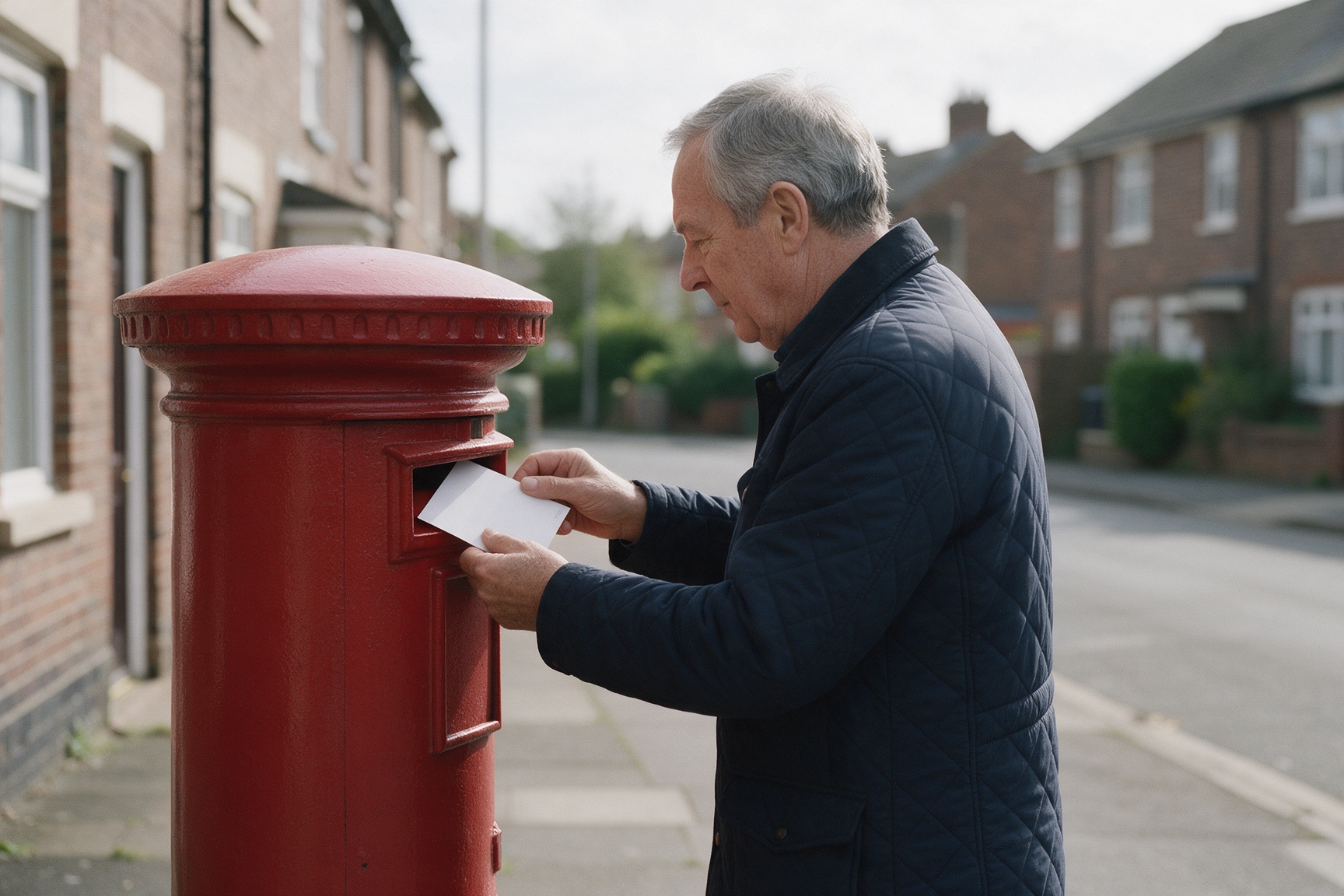
Write your full name, address, phone number, email and the name of the competition on a postcard, then send it first or second class to the address in that competition's terms. It costs you a stamp, it carries exactly the same chance of winning as a paid entry, and the law requires every paid UK competition to offer it.
By Mitch Barnes · Last reviewed 16 September 2026
Full disclosure: we're about to be one of the sites selling tickets, and we'd rather you bought one. We're explaining the free route anyway, because it's your right and hiding it is how bad operators behave.
Why the free route exists at all
Not because operators wanted to offer it.
A paid competition where pure chance picks the winner is a lottery, and lotteries need a licence. Schedule 2 of the Gambling Act 2005 sets out the way round that. Offer a genuine free way in, meeting four conditions at once, and the competition stays lawful.
All four have to hold:
- You get a genuine choice between paying and entering free
- The free route costs no more and is no harder to use than paying
- It's publicised clearly enough that people know before they enter
- Free entries go into the same draw, with the same chance of winning
That last one is the part worth holding onto. A free postal entry isn't a consolation prize or a lesser class of ticket. It's the same entry, in the same draw, with the same odds, and an operator that weights them differently has broken the law, not bent a rule.
What to write and where to send it
Every operator sets its own wording, so the terms are the authority. The requirements are fairly consistent though, and a postcard carrying everything below will satisfy most of them.
- Find the postal address. It's in the competition terms, usually under a heading like "free entry route" or "postal entry". If you can't find it in two minutes, that tells you something about the operator.
- Read that clause properly before you write anything. It will say what details are required, whether one card can carry one entry or several, and what the postal deadline is.
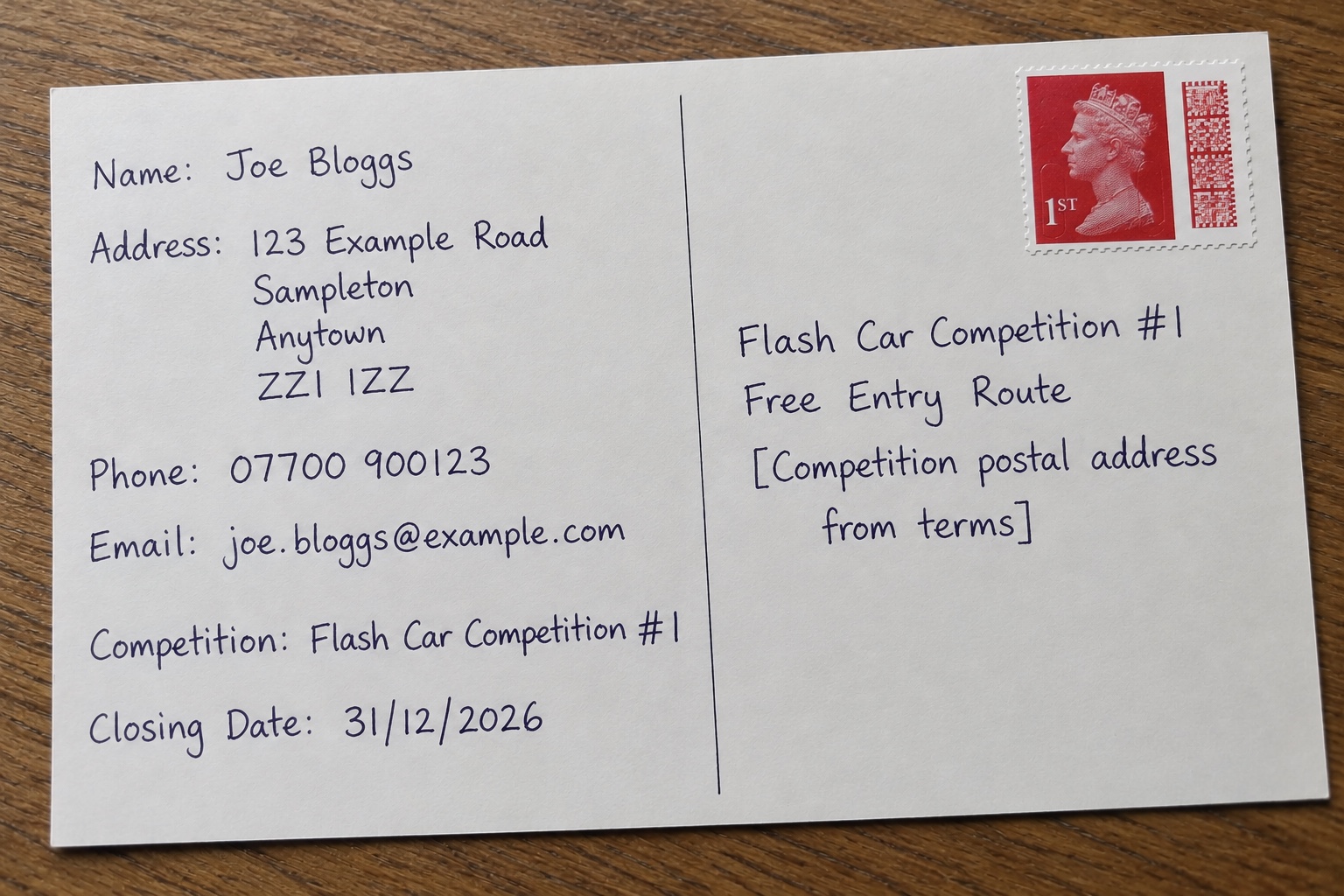
- Use a postcard, unless the terms say otherwise. Some operators accept a sealed letter. Most specify an unenclosed postcard, because it's cheaper for them to process.
- Write your full name, address including postcode, phone number and email address. Missing contact details are the most common reason a valid entry can't be paid out.
- Name the exact competition. "The car one" isn't enough. Use the title as it appears on the site, and include the closing date if the terms ask for it.
- One entry per card, unless the terms explicitly allow more. Where they don't, a card with three entries on it is usually counted as one, or discarded.
- Send it first or second class. The Gambling Commission treats "free" as free at the ordinary rate. An operator demanding recorded or special delivery has made the free route more expensive than paying, which is exactly what the four conditions forbid.
- Post it early enough to arrive. This is where most free entries die.
The deadline is the bit that catches people
Posting on the closing date is not the same as arriving by it. Those are different days.
Many operators set an earlier deadline for postal entries than for online ones, and almost all of them require the card to have arrived, not to have been posted. Royal Mail delivery targets are not guarantees, so a card posted second class two days before the draw is a gamble on top of the gamble.
Read the clause and work backwards. If the terms say entries must be received by the closing date, give it a week.
What voids an entry
Most rejected postal entries fail on something small, and every one of these is avoidable if you read the clause once before you write anything down.
- Missing contact details. No phone or email, and an operator that draws your card may not be able to reach you.
- The wrong postage. Some operators reject anything sent recorded or signed-for, because it doesn't fit their process.
- Arriving after the closing date, however early it was posted.
- Multiple entries on one card where the terms allow only one.
- The competition not clearly identified, which is a problem on sites running twenty draws at once.
- Entering more times than the per-person limit allows, which can void every entry rather than just the excess.
Do postal entries actually win?
They have to, legally, and the same Schedule 2 that creates the route says the prize allocation can't treat paid and free entries differently.
Whether a given operator honours that properly is a separate question, and it's one of the things to check before you trust a site. We've covered the evidence in do free postal entries win, and the wider question of how to check an operator in our ten minute check.
The part operators don't say out loud
The free route is subsidised, and the maths only works because most people don't use it.
Paid entries fund the prize and the operator's costs. If everyone posted a card, there'd be no prize to draw. Every operator in this industry knows that, and every operator would rather you paid, ourselves included. That's not a scandal and it isn't a reason to feel bad about posting a card. It's just the thing nobody in this business says in public.
One more honest note. A stamp and ten minutes is a real cost, and in a draw selling 50,000 tickets it buys you a 0.002% chance. The free route changes what you spend. It doesn't change the odds, and the odds are usually the problem. The arithmetic is here if you want it.
How NetCompetitions handles free entry
We open later this year, so there's nothing to check yet. These are commitments.
- The free postal route linked from every competition page, not buried in the terms
- The full postal address, required details and postal deadline stated on that page in plain English
- Free entries in the same draw, with the same weighting as paid entries
- No requirement for recorded or special delivery, ever
You can read how it works in the meantime, and the glossary covers the terms you'll meet in a free entry clause.
The bottom line
Postal entry is a real right, it genuinely carries the same odds, and it takes about ten minutes the first time. The two things that will cost you are the deadline, which is often earlier than you expect, and missing contact details on the card.
Worth doing if you were going to enter anyway and would rather not pay. Not worth doing as a strategy, because a free entry into a draw with terrible odds is still a draw with terrible odds.
Frequently asked questions
How do you enter a competition by post?
Write your full name, address, phone number, email address and the exact name of the competition on a postcard, then send it first or second class to the postal address given in that competition's terms. Check the terms first, because they set the required details, the postal deadline and whether one card can carry more than one entry.
Is postal entry really free?
Yes, beyond the cost of a stamp and the card. UK rules require the free route to cost no more than paying, and the Gambling Commission treats that as ordinary first or second class post. An operator insisting on recorded or special delivery has made the free route more expensive than paying, which the rules forbid.
Do postal entries have the same chance of winning?
Yes. Schedule 2 of the Gambling Act 2005 says the prize allocation cannot treat paid and free entries differently, so both go into the same draw with the same weighting. Whether an operator honours that properly is worth checking before you enter.
What do you write on the postcard?
Your full name, your address including postcode, a phone number, an email address, and the exact title of the competition you want to enter. Some operators also ask for the closing date or a reference number, so read the free entry clause before you write anything.
Can you send more than one entry on the same card?
Usually not. Most operators require one entry per card, and a card carrying several is often counted once or discarded entirely. The terms will say, and where they allow multiple entries they normally cap how many one person can hold.
What happens if my postal entry arrives late?
It does not go into the draw. Almost all operators require entries to have arrived by the closing date rather than to have been posted by it, and postal deadlines are often earlier than online ones. Post at least a week ahead if the terms are not specific.