Why Do I Never Win Competitions?
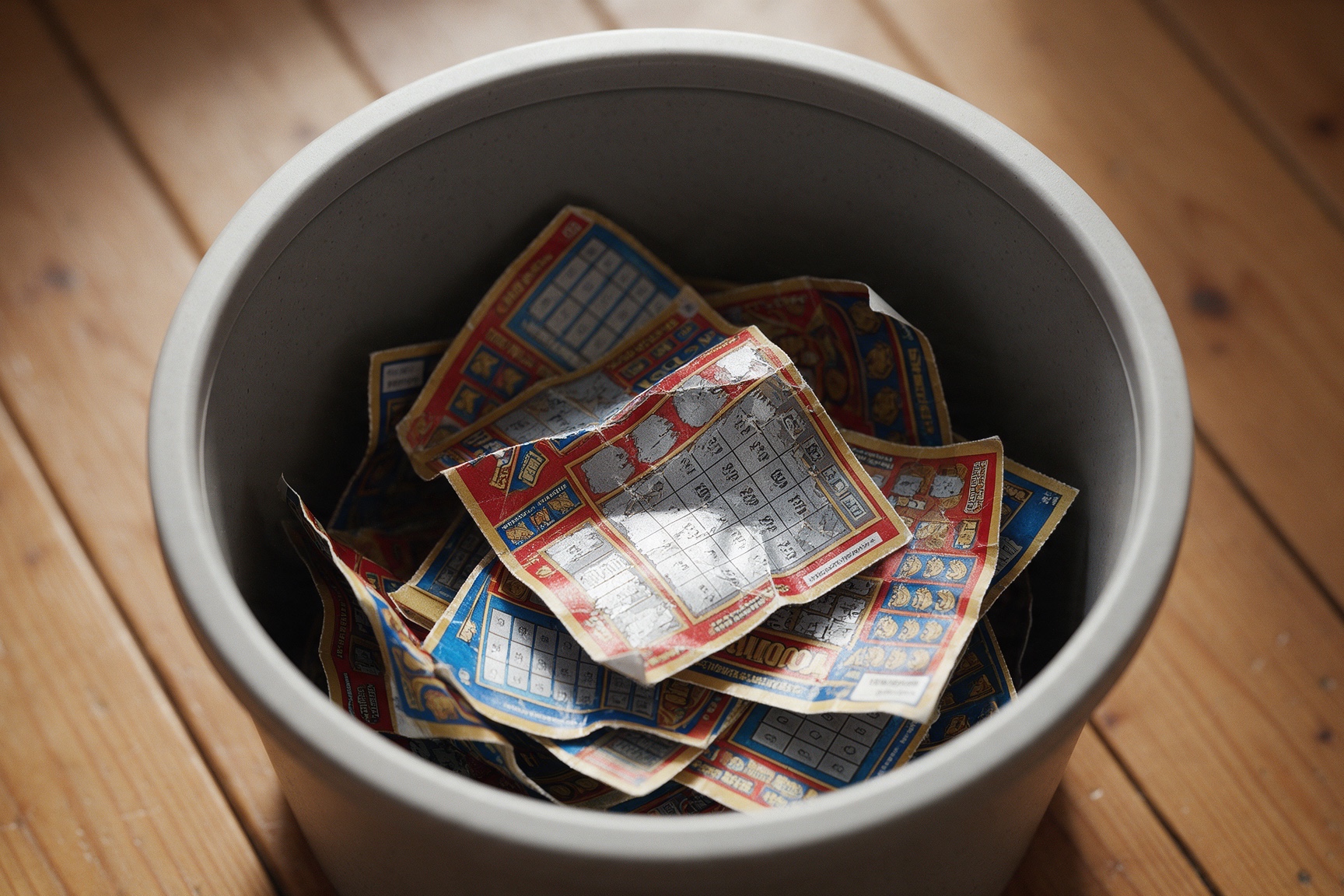
You're not unlucky. If you've entered a few dozen competitions and won nothing, that's the single most likely thing that could have happened to you, and the arithmetic below shows exactly how likely. What changes your chances isn't entering more. It's entering fewer, smaller draws, or deciding the whole thing isn't worth your money.
By Joanne Jones · Last reviewed 15 September 2026
Full disclosure: we're about to be one of the sites selling you tickets. Bear that in mind when you read the part where we tell you how to spend less.
Are you actually unlucky?
Almost certainly not. It is worth knowing what "unlucky" would have to mean, though, because the word is doing a great deal of work in that question and almost none of it is about you.
Say you enter forty competitions, each selling 500 tickets. Losing all forty is 92% likely. Not unusual, not a bad run, not a sign of anything. Just the most common outcome by a distance.
Push the ticket count up to 5,000 and losing all forty becomes 99.2% likely. At that point winning even once would be the surprising result, and someone who did would probably tell you they were lucky. They'd be right.
So the feeling that you never win isn't a misreading of your own experience. It's an accurate reading of it. The thing worth questioning is what you concluded from it.
The arithmetic nobody shows you
Everyone in this industry says the odds are long. Almost nobody prints the numbers, so here they are.
Your chance in a single draw is one divided by the number of tickets sold. A £2 ticket in a 500 ticket draw gives you 0.2%. The same £2 in a 50,000 ticket draw gives you 0.002%. The price told you nothing at all. The ticket count told you everything, which is why it is the number you should be looking for before you look at the prize.
Now stretch that over a year. Fifty entries at £2, spread across 500 ticket draws, costs you £100 and gives you roughly a 9.5% chance of winning something, once. The same £100 spent on 10,000 ticket draws gives you 0.5%. Same money, same effort, nineteen times the difference, and the only variable was a number most sites don't publish.
What winning once would actually cost
This is the table the industry doesn't print. It's how many £2 tickets you'd need to buy before winning at least once becomes more likely than not.
| Tickets in the draw | Entries needed | What that costs at £2 |
|---|---|---|
| 500 | 347 | £694 |
| 2,000 | 1,386 | £2,772 |
| 10,000 | 6,932 | £13,864 |
| 50,000 | 34,658 | £69,316 |
The formula is n = ln(0.5) / ln(1 - 1/tickets), rounded up, and you're welcome to check it.
Read that table as a warning, not a shopping list. Nobody should be spending £694 chasing a coin flip. The bottom row is the real point: at 50,000 tickets, winning one is not a thing that is going to happen to you.
You are never "due" a win
This is the belief the question usually hides, and it's worth killing off directly.
Every draw is independent. Losing forty in a row does not improve your chances in the forty first, by any amount, ever. The tickets do not know. A draw that sells 500 tickets gives you 1 in 500 whether it is your first entry or your four hundredth.
That's the gambler's fallacy, and it's the single most expensive idea in this industry. Anyone who tells you your luck is about to turn is either confused or selling.
Is it rigged?
Very rarely. And it's the wrong thing to worry about first.
A competition doesn't need to cheat to take your money. Long odds do that legally and in plain sight. The operators worth avoiding mostly aren't rigging draws, they're hiding the ticket count so you can't work out what you're buying.
The question still deserves a real answer, and checking is cheap. Our ten minute check on any competition site covers what a credible draw method looks like and what to do when a site won't tell you.
The reasons that aren't maths
Odds explain nearly all of it. A few things do genuinely waste entries, and they're worth separating out because the fixes are different.
- Entering after the deadline. The closing time is in the terms. Entries after it don't go in the draw.
- Entering the wrong way. Free postal routes have specific requirements, and an entry that misses one may not count. The step by step postal guide covers what to send.
- Contact details you no longer use. An operator that can't reach you has a window, often seven to twenty eight days, before they redraw.
- Not reading what happens if the draw doesn't sell out. Some sites extend the closing date, which quietly worsens the odds you bought.
Fix all four and you will waste fewer entries. You will not win more often, because none of them were why you were losing.
What actually changes your odds
Two things, and one of them costs nothing.
Enter draws with fewer tickets. That is the whole game. A published ticket count is the only number that tells you what you are buying, and a site that keeps it off the page has made a decision about what you are allowed to know before you spend, which is itself the most useful thing it will ever tell you about itself.
Use the free postal route. Every paid UK competition has to offer a way in that costs nothing beyond a stamp, carrying the same chance of winning as a paid entry. It's the one lever that changes your cost without touching your odds.
Here's the trade-off nobody mentions. Low ticket counts aren't free. A draw selling 500 tickets at £2 raises £1,000, so the prize is small, or the ticket is expensive, or both. Better odds and a big prize for a low price is not a thing that exists, and anyone offering all three is doing something you'd want to look at closely. Our guide to how prize competitions work walks through where the money actually goes, and the glossary covers the terms sites use to blur it.
How NetCompetitions handles this
We open later this year, so there's nothing yet for you to check. These are commitments, and you should hold us to them.
- The total ticket count published on every competition, before you enter
- Your exact odds shown as a number, not described as "great" or "unbeatable"
- The free postal route linked from every competition page, with the same chance of winning as a paid entry
- Draws held on the published date, whether or not the competition sells out
We'd also rather you spent less with us than you can afford to lose. Decide your limit before you look at the prizes, and treat it as a limit. You can read how it works in the meantime.
The bottom line
You're not unlucky. Nothing is wrong with you. Losing is the expected outcome of most competitions, and the only lever that meaningfully moves it is the ticket count, which plenty of sites still won't show you.
So the honest answer to "how do I win more" is uncomfortable coming from us. Enter fewer competitions, pick the ones that publish their numbers, use the free route where you'd rather not pay, and set a limit you'd be relaxed about losing entirely. If that makes the whole thing sound less appealing, that's the arithmetic talking, and it was always there.
Frequently asked questions
Why do I never win competitions?
Because the number of entries is far larger than the number of prizes, so losing is the expected outcome of any single entry. Entering forty draws of 500 tickets each and winning nothing is 92% likely. That is ordinary, not unlucky.
Am I unlucky, or is something wrong?
Neither. "Unlucky" would mean losing more often than the odds predict, and a run of forty or fifty losses is what the odds predict. The number worth checking is how many tickets each draw sold, because that is what set your chances.
Are online competitions rigged?
Rigging is rare, and it is not the main reason people lose. Long odds are legal and account for nearly all of it. The more common problem is a site that never publishes its ticket count, so you cannot work out what you are buying before you buy it.
Does entering more often improve my chances?
Each extra entry adds a small chance, and the total cost adds up much faster than the chance does. At 50,000 tickets a draw, you would need roughly 34,658 entries before winning once was more likely than not. Treat entering as spending, not as a strategy.
Do free postal entries have the same chance of winning?
Yes. UK law requires the free route to carry the same chance as a paid entry, and both go into the same draw with the same weighting. It is the only way to enter that changes your cost without changing your odds.
Is there a best time to enter a competition?
No. The draw is random and every entry carries the same chance regardless of when it was submitted. Entering early only protects you from missing the deadline.